
From Oocyte to Genome: PolScope, Sanger Sequencing and NGS at Krishna IVF
Krishna IVF, Visakhapatnam | September 2026
One Reproductive Medicine Ecosystem Connecting Oocyte Biology, Embryology and Genetics
Modern IVF is no longer limited to fertilizing an egg and observing an embryo. Increasingly, reproductive medicine brings together oocyte biology, embryo development and genetics to understand reproduction at multiple biological levels.
At Krishna IVF, Visakhapatnam, this integration is supported by three important technologies available within its laboratory ecosystem:
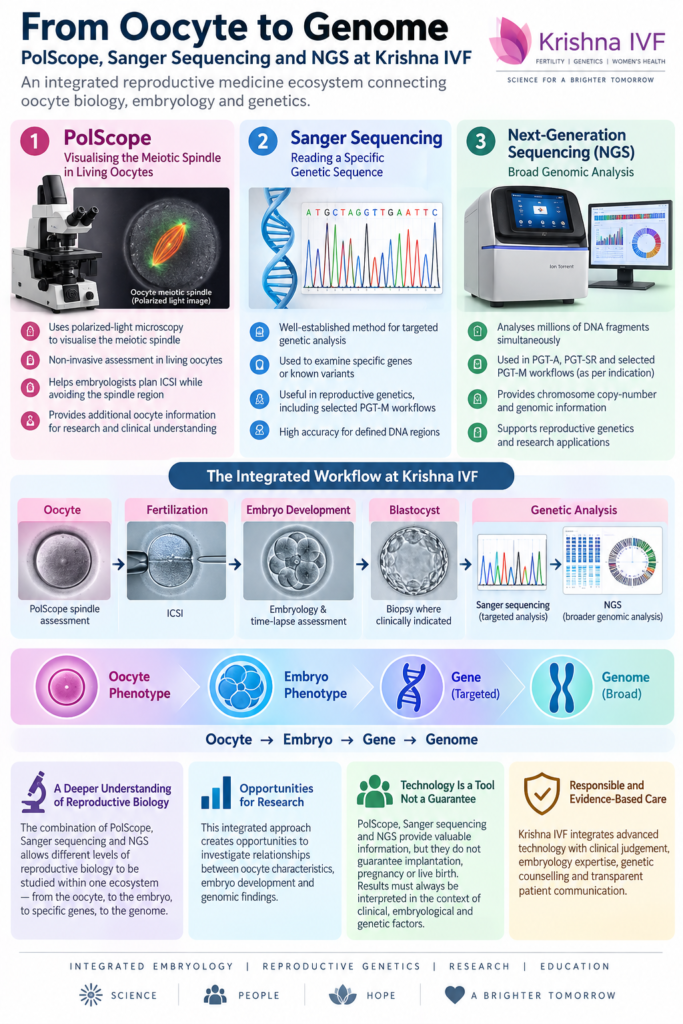
PolScope → Sanger Sequencing → Next-Generation Sequencing (NGS)
Each answers a different scientific question:
- PolScope: What can we learn about the oocyte and its meiotic spindle?
- Sanger sequencing: Is a specific DNA sequence or genetic variant present?
- NGS: What can broader, high-throughput genomic analysis reveal?
Together, they create a continuum:
Oocyte → Embryo → Gene → Genome
PolScope: Visualising the Meiotic Spindle Before ICSI
A mature oocyte contains a delicate structure called the meiotic spindle, which organizes chromosomes during cell division.
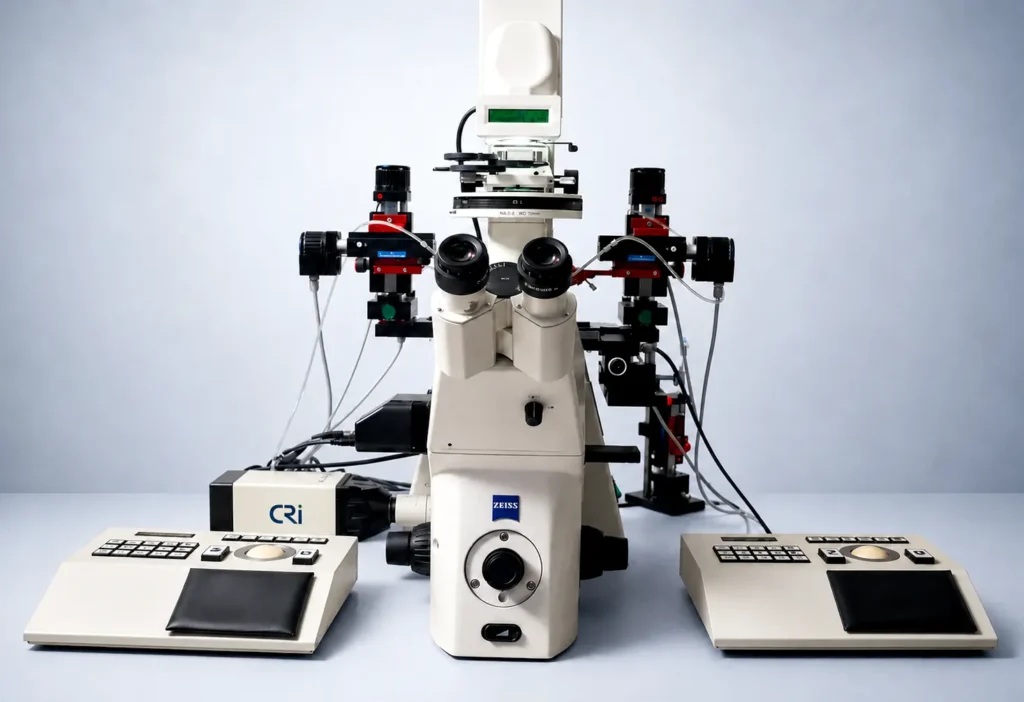
The spindle is not readily visible with conventional light microscopy. PolScope uses polarized-light microscopy to visualize spindle birefringence in living oocytes without conventional staining.
This can provide the embryologist with additional information about spindle position and characteristics before ICSI.
The biological interest extends beyond the ICSI procedure itself. Research has explored associations between meiotic-spindle characteristics, embryo development and blastocyst ploidy.
However, PolScope findings should not be interpreted as a stand-alone predictor of pregnancy or live birth.
Sanger Sequencing: Reading a Specific Genetic Sequence
The next level moves from cellular structure to DNA.
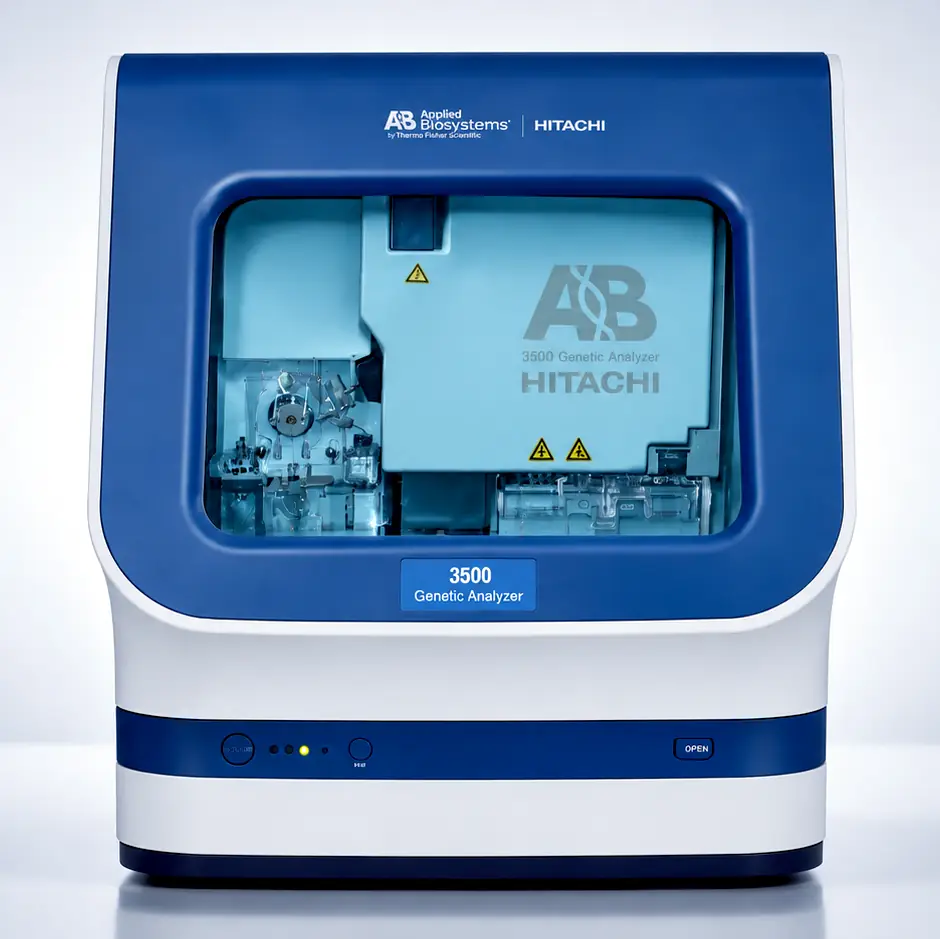
Sanger sequencing is a well-established molecular method for accurately examining defined regions of DNA.
Its strength is targeted genetic analysis.
A simplified workflow is:
DNA → Target amplification → Sequencing → Variant identification → Interpretation
In reproductive genetics, targeted sequencing may be useful when a specific gene or familial variant requires investigation, depending on the clinical indication and validated laboratory workflow.
For PGT-M, sequencing represents only one component of a considerably more complex process.
Appropriate genetic diagnosis, family work-up, assay design, haplotyping where required, validation, quality control and genetic counselling remain essential.
NGS: Expanding From a Gene to Genome-Scale Analysis
Next-Generation Sequencing (NGS) dramatically increases the amount of DNA that can be analysed simultaneously.
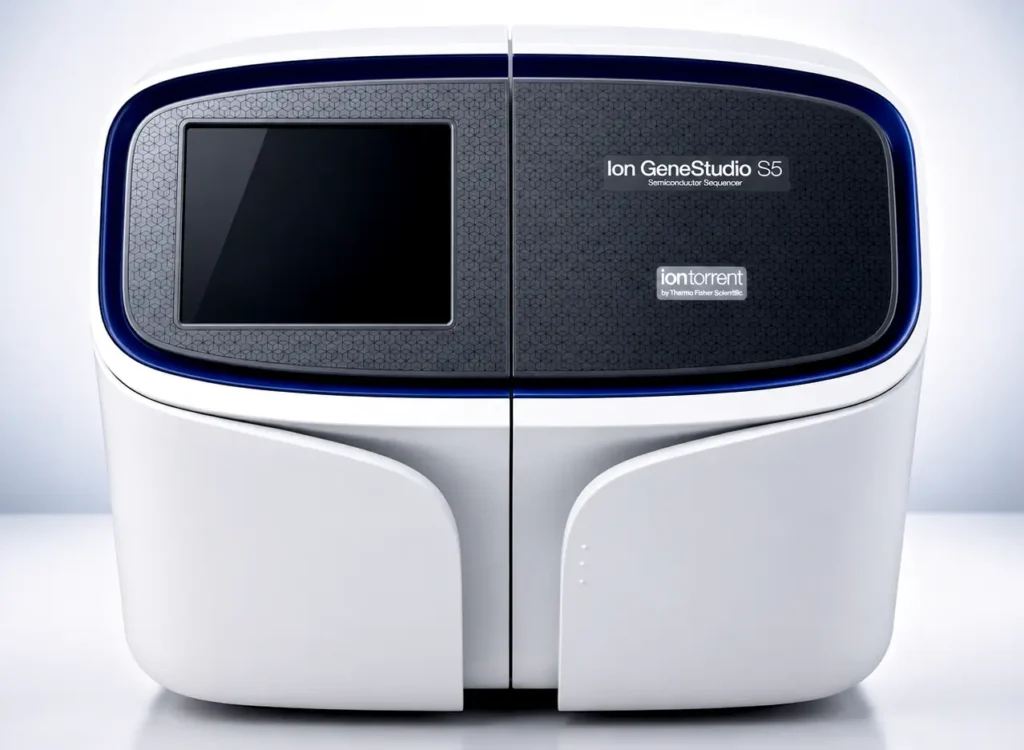
Instead of examining one short DNA region at a time, NGS can analyse millions of DNA fragments in parallel.
Depending on the validated assay and clinical indication, NGS-based approaches have applications in reproductive genetics including:
- chromosome copy-number assessment;
- PGT-A workflows;
- PGT-SR workflows;
- selected PGT-M strategies;
- targeted multigene analysis; and
- reproductive-genetics research.
NGS therefore represents an important bridge between molecular genetics and contemporary reproductive medicine.
Three Technologies—Three Levels of Reproductive Biology
The significance of having PolScope, Sanger sequencing and NGS within the Krishna IVF ecosystem is not simply the presence of sophisticated equipment.
Their scientific value lies in connecting different levels of reproductive biology.
| Biological level | Technology | Principal question |
|---|---|---|
| Oocyte | PolScope | What can we observe about meiotic-spindle architecture? |
| Embryo | Embryology / time-lapse | How does the embryo develop? |
| Gene | Sanger sequencing | Is a particular sequence variant present? |
| Genome | NGS | What broader genomic information can be obtained? |
This creates a translational pathway:
Oocyte Phenotype → Embryo Phenotype → Genotype
Connecting PolScope With Embryo Development
The oocyte provides the biological foundation for the embryo.
With PolScope, characteristics such as spindle visibility, position and morphology can be documented.
Following ICSI, embryo development can then be observed through conventional embryology and, where used, time-lapse monitoring.
This creates the possibility of asking important research questions:
Does spindle morphology relate to fertilization?
Does it relate to cleavage behaviour or blastocyst development?
Can characteristics seen in the oocyte be connected with later embryo phenotype?
These remain research questions rather than established clinical predictions.
Connecting Embryology With Genetics
When genetic testing is clinically indicated, another layer becomes available.
Oocyte
PolScope spindle assessment
Fertilization
ICSI
Embryo
Developmental assessment and morphokinetics
Blastocyst
Biopsy where appropriately indicated
Genetics
Sanger sequencing / NGS according to the genetic question
Integrated reproductive biology
This is where the convergence of embryology and genetics becomes particularly interesting.
Rather than studying an embryo only by its appearance, researchers can investigate relationships between cellular phenotype, developmental phenotype and genetic findings.
An Opportunity for Translational Research at Krishna IVF
The integrated infrastructure provides a foundation for research connecting observations made at different stages of reproduction. A prospective research model could examine:
PolScope phenotype
Spindle visibility
Spindle morphology
Spindle orientation
Polar-body–spindle relationship
Embryo phenotype
Fertilization
Cleavage pattern
Morphology
Time-Lapse Morphokinetics
Pronuclear events
t2–t8
Compaction
Blastulation
Genetic findings
Where genetic testing is clinically indicated
Oocyte Phenotype × Embryo Phenotype × Genotype
Such research could contribute to a deeper understanding of how oocyte meiosis, embryo development and chromosomal biology are related.
Technology Is a Tool—Not a Guarantee
Advanced technology must always be interpreted responsibly.
PolScope does not determine whether an individual oocyte will produce a pregnancy.
Sanger sequencing does not identify every possible genetic abnormality.
NGS results depend on the clinical indication, sampling, assay design, laboratory validation, bioinformatics and interpretation.
Similarly, PGT is not required for every IVF patient and does not guarantee implantation, pregnancy or the birth of an unaffected child.
Technology should therefore support—not replace—clinical judgement, embryology expertise, genetic counselling and individualized patient care.
This approach is consistent with Krishna IVF’s communication policy that technology should be presented as an aid to evidence-based reproductive care rather than as a guarantee of outcomes.
From Oocyte to Genome: The Krishna IVF Scientific Continuum
The future of reproductive medicine is unlikely to depend on any single microscope, sequencer or algorithm.
Its greater potential lies in connecting information across different levels of reproductive biology.
At Krishna IVF, the availability of PolScope, Sanger sequencing and NGS, together with clinical embryology and embryo-development assessment, provides the infrastructure for this integrated approach.
See the Oocyte.
PolScopeStudy the Embryo.
Embryology & Time-LapseRead the Gene.
Sanger SequencingExplore the Genome.
Next-Generation SequencingOocyte → Embryo → Gene → Genome
This represents the direction of Krishna IVF’s continuing work at the intersection of clinical reproductive medicine, embryology, reproductive genetics, research and education.
Educational note: This article is intended for general scientific and educational information. Genetic investigations and PGT require individualized clinical and genetic assessment. Laboratory technologies do not guarantee implantation, pregnancy or live birth.