
Female Infertility Workup
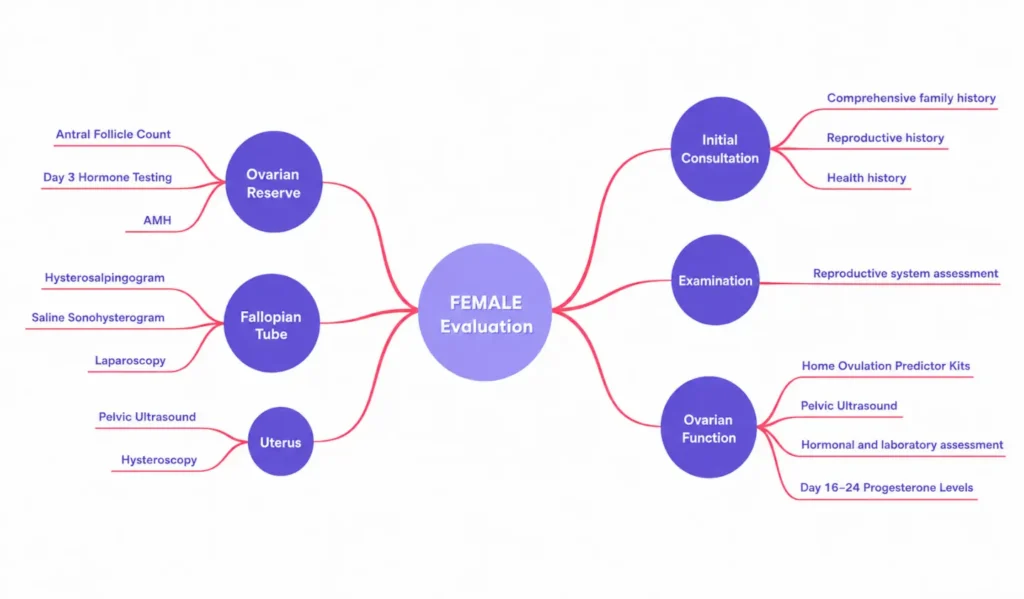
Female infertility evaluation forms an important part of reproductive medicine assessment and is generally planned alongside male fertility evaluation as part of couple-based fertility assessment.
Female infertility workup typically begins with detailed medical, reproductive, menstrual, and clinical history followed by physical examination and pelvic ultrasound assessment of the uterus, ovaries and related reproductive structures.
Ultrasound imaging assessment may assist evaluation of uterine anatomy, fibroids, adenomyosis, ovarian morphology, endometriosis-related findings and ovarian reserve assessment in selected clinical situations. Antral follicle count assessment and hormonal evaluation may also be utilized as part of ovarian reserve assessment protocols.
Blood investigations may be performed to evaluate hormonal, endocrine, metabolic and general health parameters relevant to reproductive medicine assessment.
Basic infertility evaluation of the couple is generally planned in a structured manner and may be completed over approximately one and a half days depending on the clinical requirements and investigations advised.
Additional investigations may be considered depending on clinical indications and previous treatment history. Tubal assessment may be performed using Hysterosalpingography (HSG) or laparoscopy in selected situations. Genetic investigations, infection screening and selected immunological assessments may also be advised where clinically indicated.
Review of previous reproductive treatment history and prior assisted reproductive procedures may form part of individualized fertility assessment and treatment planning workflows.
Krishna IVF utilizes reproductive imaging, endocrinology, genetics, embryology and laboratory-based assessment systems as part of individualized reproductive medicine and fertility evaluation protocols.