
Karyotyping
Karyotyping and Chromosomal Analysis
Karyotyping is a cytogenetic laboratory test used to examine the number and structure of chromosomes within a cell. It may assist in identifying selected chromosomal alterations associated with infertility, recurrent pregnancy loss, congenital conditions, abnormal prenatal findings and certain inherited reproductive risks.
Human cells normally contain 46 chromosomes arranged in 23 pairs, including the sex chromosomes. Karyotype analysis generally involves culturing suitable cells, preparing chromosomes at the metaphase stage, applying specialised banding techniques and examining the chromosomes under a microscope.
What Karyotyping Can Identify
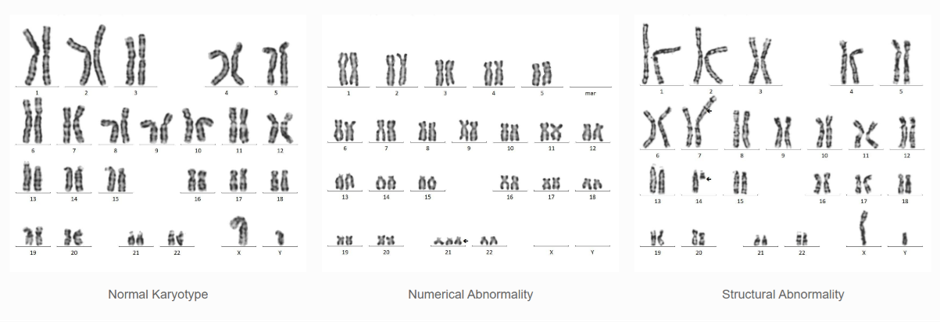
Karyotyping may identify chromosomal alterations such as:
- Additional or missing chromosomes
- Sex-chromosome variations
- Translocations
- Inversions
- Larger deletions or duplications
- Selected mosaic chromosome patterns
Role in Reproductive Medicine
Karyotyping may be considered in selected clinical situations, including:
- Infertility where a chromosomal cause is suspected
- Recurrent pregnancy loss
- Selected cases of repeated IVF failure
- A previous pregnancy affected by a chromosomal abnormality
- Congenital anomalies or developmental concerns
- Abnormal prenatal screening or diagnostic findings
- A known or suspected chromosomal alteration in the family
Parental karyotyping may be advised when a pregnancy or fetal sample shows a chromosomal alteration, or when the couple’s reproductive and family history suggests the possibility of a balanced chromosomal rearrangement.
Not every person or couple undergoing fertility treatment requires karyotyping. The test is selected according to the clinical indication after appropriate evaluation.
Samples Used for Karyotyping
The sample required depends on the clinical purpose of testing. Samples may include:
- Peripheral blood
- Amniotic fluid
- Chorionic villus samples
- Products of conception or other fetal tissue
- Other suitable tissue specimens in selected circumstances
Prenatal samples are obtained through procedures such as amniocentesis or chorionic villus sampling. The appropriateness and timing of these procedures are determined by the treating obstetric or fetal-medicine specialist.
Digital Karyotyping with MetaSystems IKAROS
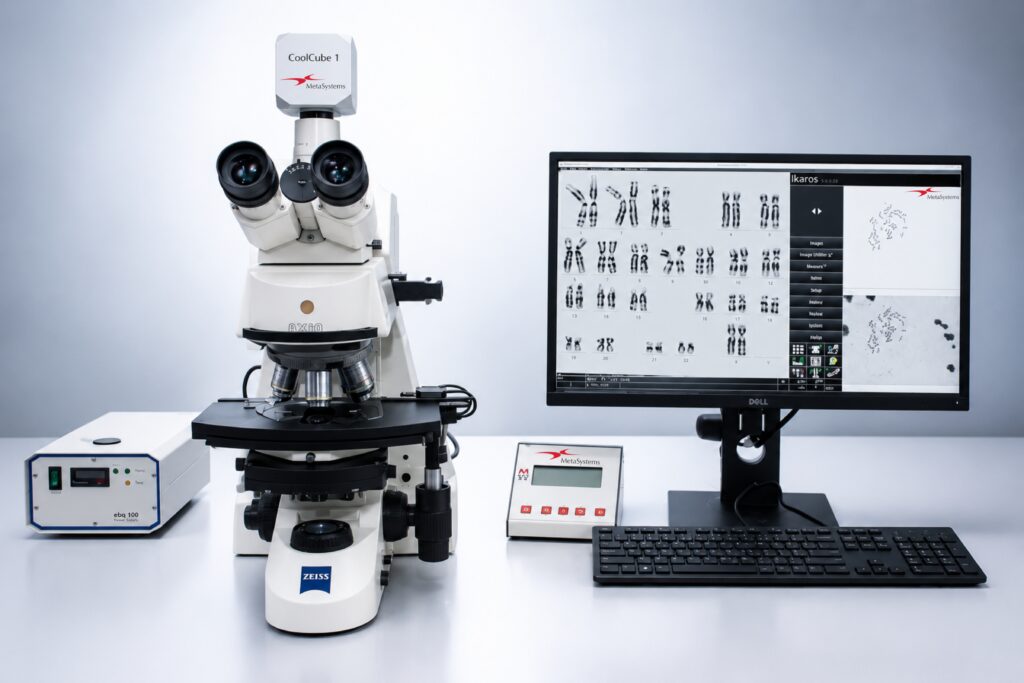
Krishna IVF uses the MetaSystems IKAROS platform to support its cytogenetics workflow. The system enables chromosome images to be captured from the microscope, processed digitally and organised into a preliminary karyogram for professional review.
Digital tools may assist laboratory workflow by supporting:
- Capture and processing of metaphase chromosome images
- Separation and arrangement of individual chromosomes
- Adjustment of image contrast for band visualisation
- Preparation of karyograms
- Documentation, storage and later review of chromosome images
The software supports laboratory professionals during image processing and chromosome arrangement. It does not replace the examination, interpretation and judgement of a trained cytogenetics professional. MetaSystems describes IKAROS as an image-processing system in which karyotypes are assembled by the operator with software support.
Understanding the Limitations
Karyotyping is designed to identify chromosome-number abnormalities and structural changes that are large enough to be seen at the test’s level of resolution. It may not detect small genetic variants, single-gene alterations or submicroscopic chromosome changes.
A normal karyotype does not exclude every genetic condition. Depending on the clinical question, additional testing such as FISH, chromosomal microarray or molecular genetic testing may be considered.
Results should be interpreted alongside the individual’s clinical findings, reproductive history and family history. Genetic counselling may help individuals and couples understand the findings, their limitations and any implications for reproductive planning.
Karyotyping at Krishna IVF forms part of its broader cytogenetics, reproductive-genetics, fertility-evaluation and prenatal diagnostic workflows.