
Geri Time-Lapse Incubator
Time-Lapse Embryo Culture and Monitoring
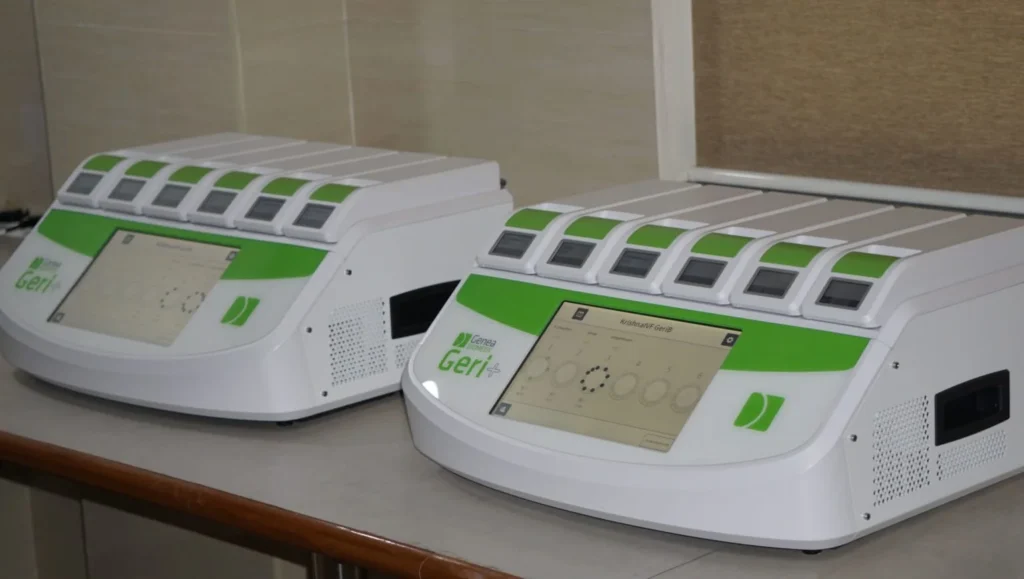
The Geri time-lapse incubator is an embryo culture and monitoring system used in assisted reproductive technology laboratories. Time-lapse systems are designed to support embryo culture while allowing embryologists to observe embryo development through sequential imaging without repeated removal of embryos from the incubation environment.
At Krishna IVF, time-lapse embryo culture systems are used as part of embryology laboratory workflows in selected IVF treatment cycles.
Understanding Time-Lapse Embryo Culture
Traditional embryo assessment in IVF laboratories may involve periodic observation of embryos at specific time points during culture. Time-lapse systems are designed to enable continuous or interval-based imaging of embryo development while maintaining embryos within a controlled incubation environment.
This approach allows embryologists to review developmental patterns, timing of cell divisions, and embryo morphology over time without repeated handling or environmental exposure during observation.
Time-lapse monitoring is intended to support embryo assessment and laboratory documentation. Embryo selection decisions continue to depend on multiple clinical, embryological, and patient-related factors.
Controlled Embryo Culture Environment
Time-lapse incubator systems are designed to maintain stable environmental conditions during embryo culture.
The Geri incubator includes individually controlled chambers intended to support:
- stable temperature conditions
- controlled gas environment
- reduced environmental fluctuation during observation
- minimized handling during embryo monitoring
- continuous embryo imaging during culture
The system is designed to support laboratory workflow consistency and embryo culture stability during assisted reproductive procedures.
Embryology Laboratory Monitoring
Time-lapse monitoring enables embryologists to review embryo development patterns over time. Sequential imaging may assist laboratory assessment by providing additional developmental information during embryo culture.Embryo evaluation, however, is not based solely on time-lapse imaging. Clinical history, egg quality, sperm factors, embryo morphology, developmental progression, and overall reproductive context continue to remain important in treatment planning.
Time-lapse systems are intended to support embryology practice and laboratory assessment rather than guarantee implantation or pregnancy outcomes.
Laboratory Technology and Clinical Practice
Embryology laboratories use different incubator systems and embryo assessment methods depending on laboratory protocols, infrastructure, and clinical approach.
At Krishna IVF, embryology laboratory practice involves:
- controlled embryo culture systems
- laboratory quality protocols
- embryo monitoring and documentation
- coordination between clinical and embryology teams
- individualized treatment planning
- evidence-based reproductive laboratory practices
Technology is used as a support to embryology and reproductive care, while treatment decisions continue to require clinical interpretation and patient-specific evaluation.
Individualized IVF Treatment Planning
Not every IVF cycle requires the same laboratory approach. The use of time-lapse monitoring may depend on:
- laboratory workflow considerations
- embryology assessment protocols
- embryo culture planning
- patient-specific treatment factors
- clinical and laboratory judgement
Embryo development and IVF outcomes remain influenced by several factors, including age, ovarian reserve, egg quality, sperm quality, embryo viability, uterine factors, and overall reproductive health.
Safety, Quality and Laboratory Environment
Embryology laboratory systems are intended to support stable culture conditions during IVF treatment. Laboratory quality standards, environmental control, monitoring systems, documentation practices, and embryologist expertise all contribute to responsible embryo culture practices.
At Krishna IVF, embryo culture systems are used within broader assisted reproductive laboratory protocols focused on patient safety, quality-oriented laboratory practice, and evidence-based reproductive medicine.
Important Considerations
Patients should understand that embryo monitoring technologies assist laboratory observation and embryology assessment, but they do not independently determine IVF success.
No embryo culture system can guarantee:
- fertilisation
- embryo development
- implantation
- pregnancy
- live birth outcomes
Treatment outcomes continue to depend on multiple clinical and biological factors unique to each patient.
Clear counselling regarding the role and limitations of embryology technologies is therefore important during IVF treatment planning.