
Cervical Cerclage
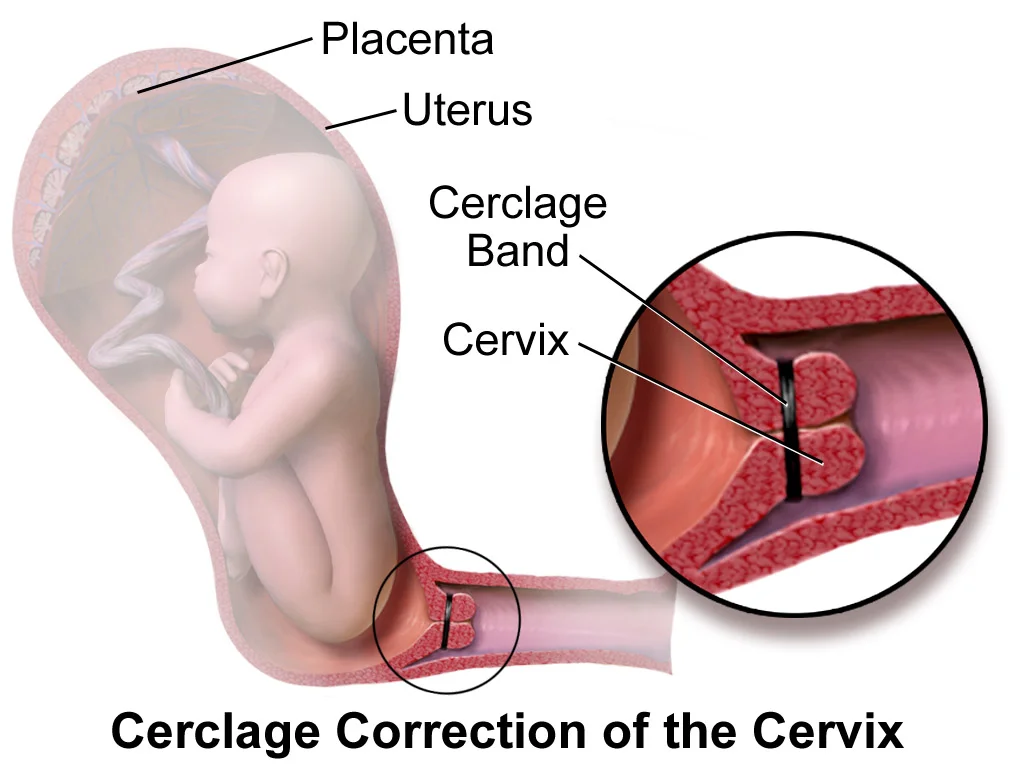
Cervical cerclage is a surgical procedure performed during pregnancy to provide mechanical support to the cervix in selected situations associated with cervical insufficiency or increased risk of preterm birth.
The procedure generally involves placement of a non-absorbable suture around the cervix under regional or general anesthesia depending on the clinical situation and obstetric assessment.
Transvaginal cerclage is the most commonly performed approach. In selected situations where transvaginal cerclage is not feasible or previous cerclage procedures have not been successful, transabdominal cerclage may be considered based on obstetric evaluation and clinical indications.
Cervical cerclage is commonly planned during the second trimester, although the timing may vary depending on cervical findings, obstetric history, ultrasound evaluation, and individual pregnancy-related factors.
Pregnancy monitoring following cerclage may include clinical evaluation, cervical assessment, ultrasound monitoring, fetal surveillance, and individualized obstetric follow-up depending on the clinical condition.
The cerclage suture is generally removed during the later stages of pregnancy depending on the type of procedure, obstetric planning, and anticipated mode of delivery.
Cervical cerclage at Krishna IVF forms part of broader high-risk obstetrics, fetal monitoring, and individualized pregnancy care workflows.