
Does the Uterus Have an Age Limit? New Research Suggests Yes - even with Donor Eggs
Krishna IVF Clinic | Evidence-Based Fertility Care
For many years, reproductive medicine has focused primarily on egg quality as the major determinant of IVF success. Donor egg IVF has transformed treatment for women with diminished ovarian reserve or menopause because it effectively overcomes age-related decline in egg quality.
However, an important new study presented at ESHRE 2025 and published in Human Reproduction adds another dimension to this discussion:
The uterus itself appears to age, and after approximately 49 years of age, uterine ageing may independently reduce the chance of a successful pregnancy—even when embryos are created from healthy donor eggs.
This finding has significant implications for fertility specialists, gynecologists, and women considering pregnancy later in life.
Why This Study Matters
For decades, clinicians believed that replacing ageing eggs with donor eggs largely eliminated the effect of maternal age on IVF success. This new evidence suggests that this assumption is only partly true. While donor eggs restore embryo quality, they cannot completely reverse age-related changes within the uterus and maternal body.
In other words:
- Egg age matters.
- Uterine age also matters.
- Maternal systemic health matters.
- Successful pregnancy depends on all three.
What Did the Researchers Study?
Researchers evaluated women undergoing donor egg IVF, allowing them to separate the effect of uterine age from egg quality.
Because donor eggs usually come from young healthy women, differences in pregnancy outcomes are more likely to reflect the influence of the recipient rather than the oocyte.
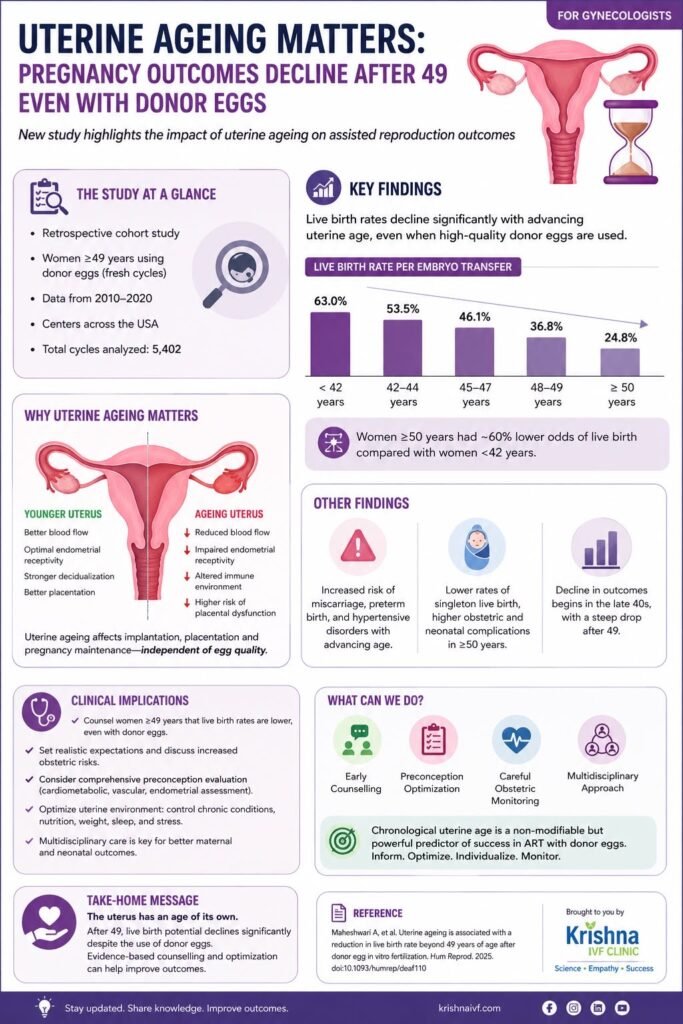
The study demonstrated that pregnancy outcomes begin to decline with advancing recipient age and become substantially poorer after approximately 49 years.
Why Would the Uterus Age?
The uterus is not a passive organ. Successful implantation requires coordinated function of:
- Endometrium
- Blood vessels
- Immune cells
- Decidual cells
- Placenta
- Hormonal signaling pathways
- Ageing affects all these systems.
Possible mechanisms include:
1. Reduced uterine blood flow
Age-related vascular changes reduce oxygen and nutrient delivery to the implanting embryo.
2. Altered endometrial receptivity
Even when the endometrium appears normal on ultrasound, molecular changes may reduce its ability to support implantation.
3. Cellular senescence
Endometrial cells accumulate age-related molecular damage and senescent changes that impair implantation and placentation. Experimental studies also support accumulation of senescent endometrial cells with ageing.
4. Immune dysregulation
Successful pregnancy requires carefully balanced maternal immune tolerance.
Ageing alters immune regulation, increasing inflammatory pathways.
5. Reduced placental adaptation
Older maternal tissues may be less capable of supporting normal placental development, contributing to obstetric complications.
Clinical Implications
For women above 45 years considering donor egg IVF:
The discussion should extend beyond ovarian reserve.
Evaluation should include:
- Cardiovascular health
- Blood pressure
- Diabetes screening
- Body weight
- Thyroid status
- Uterine cavity assessment
- Endometrial evaluation
- General medical fitness
Counselling Should Be Individualized
Rather than focusing solely on achieving pregnancy, clinicians should discuss:
- likelihood of implantation
- live birth probability
- miscarriage risk
- hypertensive disorders
- gestational diabetes
- cesarean delivery
- neonatal outcomes
Evidence-based counselling helps couples make informed decisions with realistic expectations.
What Can Be Optimized?
Although chronological uterine ageing cannot be reversed, overall maternal health can often be improved before embryo transfer.
Optimization includes:
- Weight management
- Blood pressure control
- Diabetes management
- Smoking cessation
- Regular exercise
- Nutritional optimization
- Treatment of uterine pathology
- Careful embryo transfer planning
- High-risk obstetric collaboration
These interventions may improve maternal safety even if they cannot eliminate age-related uterine changes.
What This Means for Gynecologists
Gynecologists are often the first clinicians women consult regarding delayed childbearing.
This study reinforces several important messages:
- Do not assume donor eggs completely overcome reproductive ageing.
- Evaluate maternal health comprehensively.
- Encourage earlier fertility counselling whenever possible.
- Collaborate closely with reproductive medicine specialists.
- Prepare older pregnant women for multidisciplinary obstetric care.
What This Means for Patients
If you are considering pregnancy after your late 40s:
- Donor eggs can greatly improve embryo quality.
- However, the uterus and the rest of the body also influence pregnancy success.
- A detailed medical evaluation is essential before treatment.
- Personalized counselling allows realistic expectations and safer pregnancy planning.
Age should never be viewed in isolation. Fertility care must consider the whole woman – not only her eggs.
The Krishna IVF Perspective
At Krishna IVF, we believe successful fertility treatment extends beyond laboratory excellence.
Our approach combines:
- Evidence-based reproductive medicine
- Comprehensive preconception assessment
- Personalized IVF protocols
- Advanced embryology
- High-risk pregnancy planning
- Multidisciplinary collaboration
Our goal is not simply achieving pregnancy – but maximizing the chance of a healthy mother and a healthy baby.
Key Take-Home Messages
- Donor eggs overcome age-related decline in egg quality but do not completely overcome uterine ageing.
- Pregnancy outcomes decline progressively with recipient age and appear to fall more noticeably after approximately 49 years.
- Uterine ageing likely involves vascular, immune, endometrial, and placental changes.
- Comprehensive preconception evaluation is essential for women pursuing pregnancy at very advanced maternal age.
- Individualized counselling and multidisciplinary care remain the cornerstone of safe reproductive medicine.