
Understanding Your DNA: Why Chromosomal Health Matters in Reproductive Success
By Dr G. A. Rama Raju,
Director, Krishna IVF Clinic
Introduction: The Blueprint of Life and Fertility
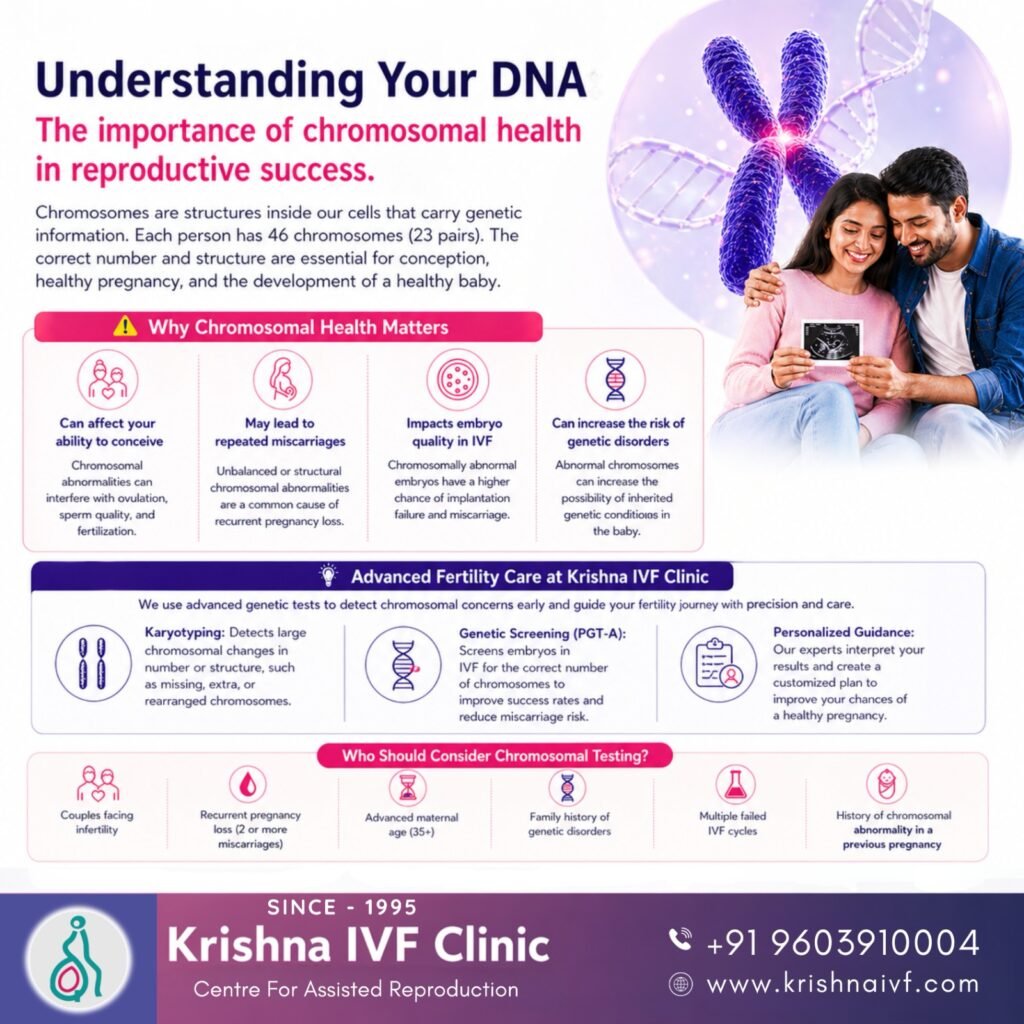
Every successful pregnancy begins with a clear genetic plan – your DNA – organised into structures called chromosomes. Chromosomes are thread-like shapes made of DNA and proteins inside the centre of each cell. They hold the instructions needed to develop a healthy embryo. Humans usually have 46 chromosomes (23 pairs), and even small changes in their number or shape can greatly affect fertility.
With this in mind, it is clear that healthy chromosomes are very important in modern fertility care. This connects basic science to practical treatments, affecting IVF success, chances of miscarriage, and preventing genetic diseases. It helps couples and doctors make better, more personal choices.
What Are Chromosomal Abnormalities?
Chromosomal abnormalities are issues with how chromosomes are arranged or how many there are. These include:
1. Numerical Abnormalities (Aneuploidy, which means having too many or too few chromosomes, like having one extra or missing chromosome)
• Extra or missing chromosomes (e.g., Trisomy 21)
• The most common cause of:
o Failed implantation
o Early miscarriage
2. Structural Abnormalities
• Translocations, inversions, deletions
• Often balanced in parents but unbalanced in embryos
Clinical Insight:
• Up to 60–70% of early miscarriages are linked to chromosomal abnormalities. These miscarriages are unfortunately
common and not due to anything parents have or haven’t done. Recognising this can help ease guilt and anxiety,
supporting a more compassionate path to parenthood.
• The chance of having an abnormal number of chromosomes goes up a lot when the mother is older than 35 years
Why Chromosomal Health Matters for Reproduction
1. Ability to Conceive• Chromosome problems affect:
o Oocyte competence
o Sperm DNA integrity
o Fertilization dynamics
2. Recurrent Pregnancy Loss (RPL)
• Parents with balanced chromosome changes can have embryos with unbalanced chromosomes
• Leading cause of recurrent miscarriage (2 or more losses)
3. Embryo Quality in IVF
• Embryos with chromosome problems:
o Lower implantation rates
o Higher biochemical pregnancy and miscarriage rates
4. Genetic Disorders in Offspring
• Increased risk of:
o Down syndrome
o Turner syndrome
o Other chromosomal syndromes
Advanced Genetic Testing in IVF
At Krishna IVF Clinic, careful fertility care includes genetic tests (tests that look at human chromosomes and genes):1. Karyotyping (a test that shows the number and shape of chromosomes)
• Detects:o Large chromosomal rearrangements
• Indications:
o Recurrent miscarriage
o Severe male factor infertility
2. Preimplantation Genetic Testing for Aneuploidy (PGT-A)
• Checks embryos before they are placed in the womb• Benefits:
o Helps embryos attach better in the womb
o Lowers chances of miscarriage
o Allows transfer of a single embryo with the correct number of chromosomes
Evidence Note:
PGT-A may help certain groups, like older mothers or those with repeated pregnancy loss, but benefits for younger patients can differ. People with repeated losses, older age, or past chromosome problems might find PGT-A especially helpful. Talk to your doctor to see if PGT-A is right for you.
3. New Technologies
• Using artificial intelligence to help choose embryos• Combining time-lapse embryo monitoring with genetic testing
• Non-invasive genetic testing of embryos using the fluid they are grown in
As new technologies emerge, it iAs new technologies develop, it is important to understand who might benefit from chromosome testing. If you are thinking about testing, make an appointment or talk with your doctor. This can help create a fertility care plan just for you. year
• Repeated pregnancy loss (2 or more times)
• Older mothers (over 35 years old)
• History of:
o Unsuccessful IVF treatments
o Genetic diseases in the family
o Previous chromosomally abnormal pregnancy. Past pregnancy with chromosome problems
At Krishna IVF, we support a multi-step approach:
Step-by-step plan, Initial check-up on
o Tests for hormones, body structure, and infections
1. Genetic testing
o Karyotype with or without PGT-A
2. Improving the balance of good bacteria
o Treat infections and restore healthy Lactobacillus bacteria.
3. Custom IVF treatment plans
o Customised hormone stimulation and embryo choice
Patient-Centred Perspective
Chromosome problems are quite common and not anyone’s fault. Many couples feel confused or guilty after repeated failures. At Krishna IVF Clinic, we understand the emotional effects. Our team provides counselling and support groups to help patients handle the emotional side of fertility care. This helps to:• Reduce anxiety
• Improve decision-making
• Set realistic expectations
Modern fertility medicine helps us find risks early and act wisely.
Future Directions in Reproductive Genetics
• Combining gene studies, artificial intelligence, and good bacteria analysis• Embryo testing without surgery or harm
• Using models to predict embryo attachment success
• Custom fertility care based on molecular details
Conclusion
Chromosomal health is essential for reproductive success. Advanced diagnostics, IVF technology, and holistic care together improve outcomes and reduce infertility burdens.
At Krishna IVF Clinic, we follow science guided by compassion and precision driven by evidence.