How Type 2 Diabetes Impacts Male Fertility and IVF Outcomes: Insights from Krishna IVF Clinic
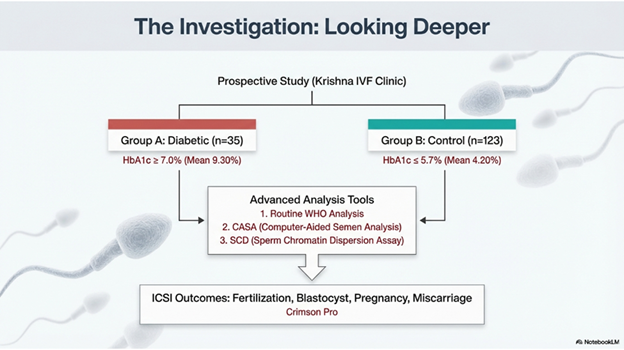
Diabetes is a well-known global health concern, but its impact on male reproductive health is a critical issue that has historically received less attention. At Krishna IVF Clinic, our research team conducted a comprehensive prospective study to understand exactly how Type 2 diabetes affects sperm quality, DNA integrity, and the success of assisted reproductive techniques like IVF and ICSI.
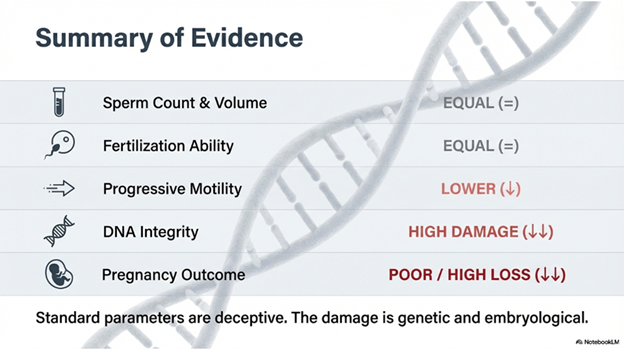
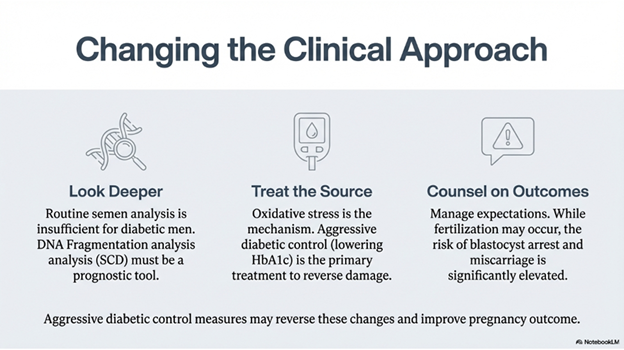
The Hidden Issue: Sperm DNA Fragmentation Historically, routine semen analyses have been of limited prognostic value in understanding male diabetic infertility. Our research shows that while basic metrics like semen volume and sperm count might remain perfectly normal in diabetic men, there are significant hidden complications.
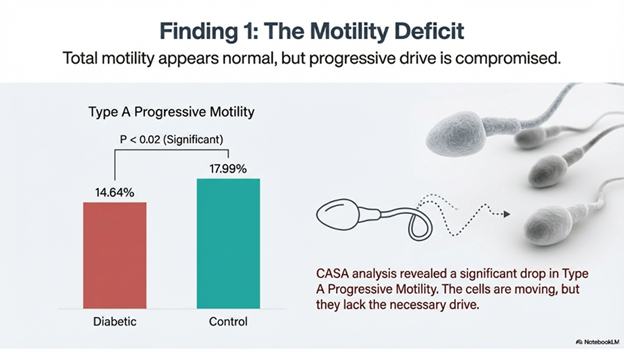
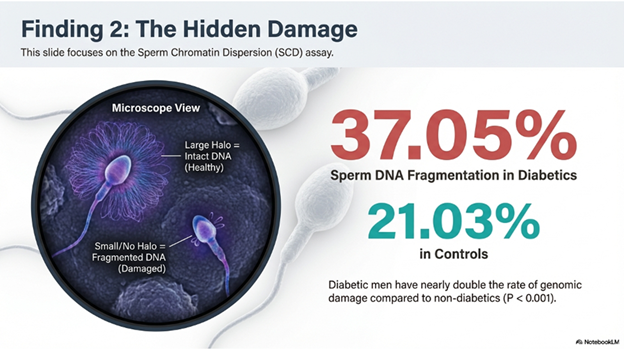
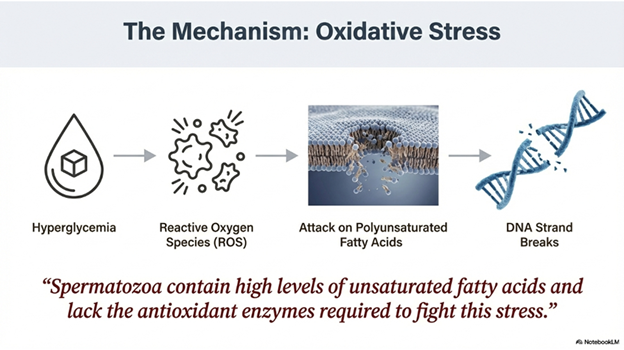
Using advanced computer-aided semen analysis (CASA) and sperm chromatin dispersion assays, we discovered that men with Type 2 diabetes experience a significant decrease in progressive sperm motility. Even more concerning, diabetic men showed a drastically higher rate of sperm nuclear DNA fragmentation—an average of 37.05% compared to just 21.03% in non-diabetic men. This hidden damage is largely driven by oxidative stress from reactive oxygen species (ROS), which harms both the mitochondrial and nuclear genetic material within the sperm.
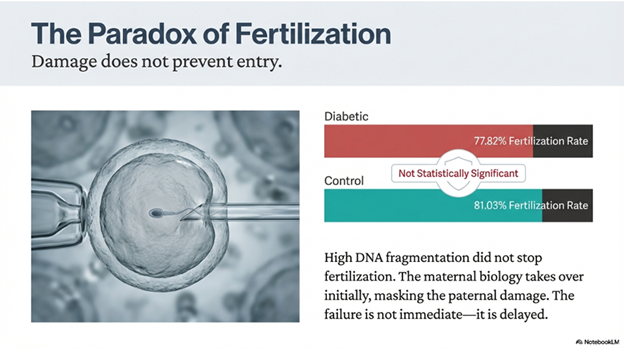
What This Means for IVF and Pregnancy Success If you are undergoing fertility treatments, you might wonder how this DNA damage affects your chances of taking home a baby. Interestingly, our study found that initial fertilization rates between diabetic and non-diabetic men are virtually identical.
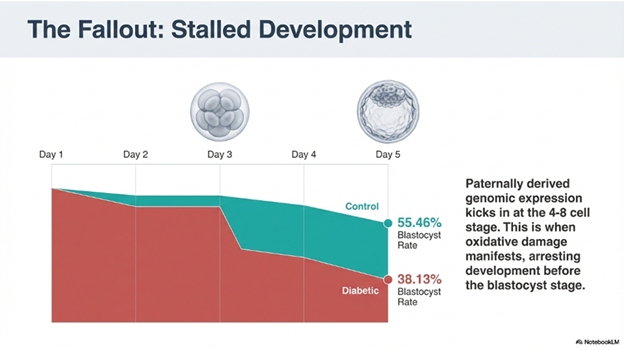
However, paternally derived genetic damage begins to take its toll in the days following fertilization, severely impacting embryonic progression. Our study revealed several critical impacts on pregnancy outcomes:
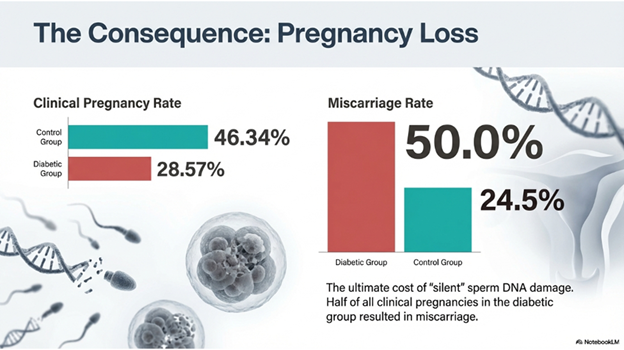
• Lower Blastocyst Formation: Embryos from diabetic fathers had a significantly lower chance of developing into healthy blastocysts (38.13% versus 55.46% in non-diabetics). • Reduced Pregnancy Rates: Clinical pregnancy rates plummeted from 46.34% in healthy controls to just 28.57% in the diabetic group. • Higher Miscarriage Rates: Post-implantation, early pregnancy is heavily influenced by DNA fragmentation. The miscarriage rate for diabetic patients was 50.0%, compared to 24.56% in non-diabetics.
Take Control of Your Fertility While these statistics may seem daunting, there is a powerful silver lining. The extent of sperm impairment relies heavily on your glycemic control. Our research concludes that aggressive diabetic control measures can reverse these adverse changes. By actively managing your blood sugar levels, you can reduce oxidative stress, protect your sperm’s DNA integrity, and ultimately improve your embryo development and pregnancy outcomes.
If you and your partner are navigating Type 2 diabetes while trying to conceive, specialized fertility care is essential.