
Menstrual Pain in a 16-Year-Old Girl - What’s Normal, What Helps, When to Seek Help
Menstrual cramps at 16 can feel scary and frustrating—especially if they disrupt school, sports, sleep, or social life. The good news is: for many teenagers, cramps are common and treatable. This guide explains why cramps happen, how to get relief safely, and the warning signs that mean you should see a doctor.
Why period pain happens
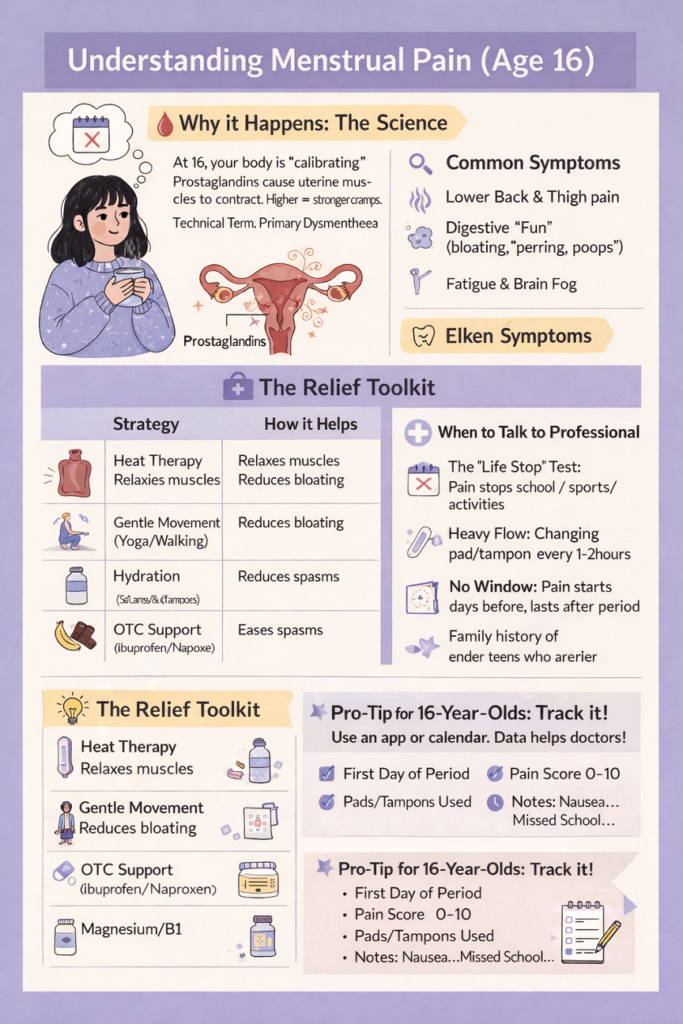
During a period, the uterus squeezes to push out its lining. Your body makes chemicals called prostaglandins to help this process. When prostaglandins are high, the uterus contracts more strongly and blood flow to the muscle can drop briefly—this can cause cramps.
In the teen years, cycles are still becoming regular. Some months may have stronger prostaglandin effects, which is why cramps can feel worse at certain times.
Medical term: When cramps happen without another disease (like endometriosis), it’s called primary dysmenorrhea.
Common symptoms (and why they occur)
Cramps don’t always stay in the lower belly. You may also notice:
Lower back or thigh pain
Bloating and gas
Loose stools/diarrhea or nausea (prostaglandins also affect the gut)
Tiredness and “brain fog”
These can be uncomfortable but are often part of the same process.
The Relief Toolkit: what usually works best
The Relief Toolkit: What Usually Works Best
Try a combination—small steps together often work better than one big step.
1) Heat Therapy (Fast and Simple)
- Use a hot water bag or heating pad on the lower abdomen or lower back.
- Heat relaxes muscles and improves blood flow.
2) Move Gently (Yes, Even a Little)
- Walking, light yoga, or stretching can reduce pain and stiffness.
- If you feel tired, even 10 minutes helps.
3) Hydration + Simple Food Choices
- Drink enough water; dehydration can worsen cramps and headaches.
- If bloating is bad, reduce very salty snacks for 1–2 days.
- Warm fluids like soups or herbal tea can feel soothing.
4) OTC Pain Medicines (Use Correctly for Best Effect)
For many teens, NSAIDs (like ibuprofen or naproxen) work well because they reduce prostaglandins.
Smart timing matters:
- Take an NSAID at the start of cramps or bleeding and continue for 1–2 days if needed.
- Taking it with food can reduce stomach irritation.
Important safety notes (do not ignore):
- Avoid NSAIDs if you have stomach ulcers, severe acidity/bleeding, kidney disease, NSAID allergy, or certain asthma patterns.
- Do not mix multiple NSAIDs together.
- If unsure about dose for your age or weight, consult a doctor or pharmacist.
5) Supplements (Optional; Evidence Is Mixed)
- Magnesium and vitamin B1 (thiamine) may help some people.
- Results vary; use safe doses and allow 6–8 weeks to judge effect. Stop if side effects occur.
A practical “pro tip” for 16-year-olds: Track it
Tracking helps you and your doctor.
Note:
- First day of bleeding
- Pain score (0–10)
- How many pads you use/day
- Any nausea, diarrhea, dizziness, missed school
- What medicine/heat you used and how well it worked
A simple phone app or calendar is enough
When cramps are NOT “just cramps”: see a professional
Please seek medical help if any of these happen:
“Life-Stop” test
● Pain makes you miss school, coaching, sleep, or daily activities.
Heavy bleeding clues
● Very heavy flow (for example, soaking through protection very frequently, passing large clots repeatedly, or feeling faint).
Pattern clues (possible secondary causes like endometriosis)
- Pain starts days before the period, becomes severe, or continues after bleeding ends.
- Pain is getting worse month by month.
- Pain with bowel movements/urination during periods.
- Pain with sex (in older teens who are sexually active).
- Family history of endometriosis.
Safety red flags
- Fever, foul discharge, sudden severe one-sided pain
- Dizziness/fainting, breathlessness, severe weakness
These need timely evaluation
Kind reassurance
Period pain is real pain. You are not “weak,” and you don’t need to suffer in silence. With the right plan – heat, movement, correct use of anti-inflammatory medicines, and tracking-most teens get meaningful relief. And if it’s not improving, that’s a reason to seek care, not a reason to “push through.”