
WHO Issues First Global Guideline on Infertility: A Call for Safer, Fairer Care
In a historic move for reproductive health, the World Health Organization (WHO) has issued its first-ever global guideline for the prevention, diagnosis, and treatment of infertility. This is a significant milestone that highlights infertility not just as a medical condition, but as a major public health challenge and an issue of global equity.

At Krishna IVF, we welcome these guidelines as they align perfectly with our philosophy of providing ethical, evidence-based, and patient-centered care.
The Reality: 1 in 6
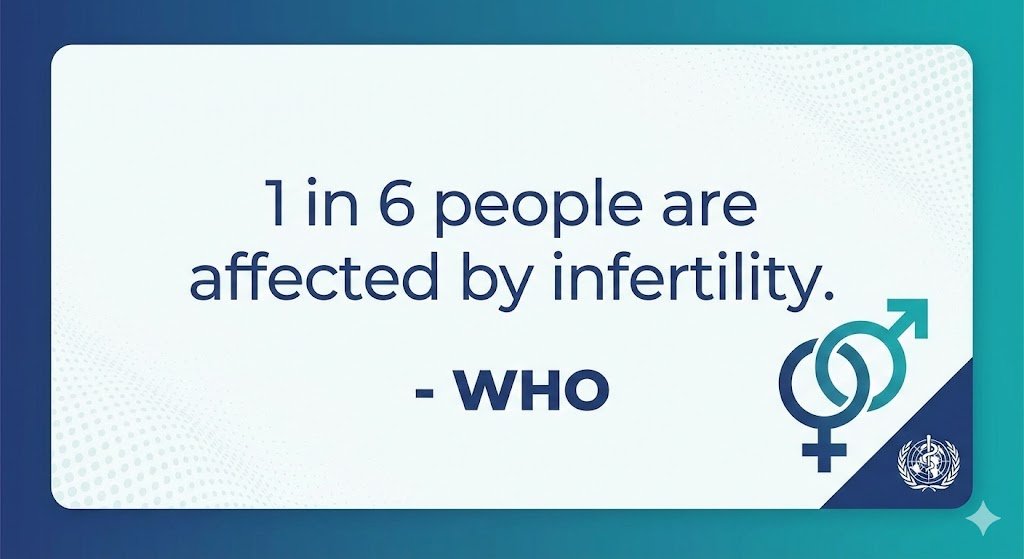
The statistics released by the WHO are eye-opening. It is estimated that 1 in 6 people of reproductive age will be affected by infertility at some point in their lives. This confirms what we see in our clinic every day: you are not alone on this journey.
Dr. Tedros Adhanom Ghebreyesus, WHO Director-General, stated, “Infertility is one of the most overlooked public health challenges of our time… Millions face this journey alone – priced out of care, pushed toward cheaper but unproven treatments, or forced to choose between their hopes of having children and their financial security.”

What the Guidelines Say (And What It Means for You)
The WHO has released 40 recommendations aimed at making fertility care more accessible and effective. For patients at Krishna IVF, these guidelines reinforce the standards of care you should expect.
The WHO emphasizes a “General Approach to Management” that prioritizes the patient. Here is how these global guidelines translate to your treatment:
1. Systematic & Cost-Effective Diagnosis
The WHO recommends selecting diagnostic tests based strictly on medical history and physical examination—avoiding random or unnecessary tests. This ensures systematic, logical and cost-effective evaluation.
2. Listening, Support & Patient-Centered Care
Global guidelines emphasize the importance of listening to individuals and couples, respecting their preferences, and offering psychological or social support when needed. Emotional well-being is central to successful fertility treatment.
3. Evidence-Based Treatment Decisions
WHO advises that treatment must be based on benefits, risks, scientific evidence, and patient values. At Krishna IVF, we follow a transparent approach—explaining success rates and possible outcomes for every procedure.
4. Prioritizing Cost-Effective Treatments
According to WHO, the least expensive yet effective treatment should be offered first. We follow a step-wise (stepped-care) model to ensure no patient is pushed into advanced procedures unless simpler, effective options have been explored.
Moving Forward
The release of these guidelines is a global wake-up call to integrate fertility care into national health strategies. At Krishna IVF, we remain committed to these gold standards—offering care that is not only scientifically advanced but also respectful, affordable, and deeply empathetic.
If you are struggling with conception, remember that help is available, and the global medical community is working harder than ever to make that help accessible to all.