
Male Infertility: A Critical Public Health Signal
Infertility Isn’t Just a Fertility Issue – It’s a Health Warning
For years, discussions around infertility have focused on reproduction. But a growing body of global evidence is showing that male infertility is far more than a reproductive problem – it is a systemic health signal.
Men who struggle with fertility are at significantly higher risk for chronic diseases, cancers, and even early mortality. These findings shift the narrative: male reproductive health must be recognized as a core component of men’s general health.
The Overlooked Connection: Cancer and Chronic Disease Risks
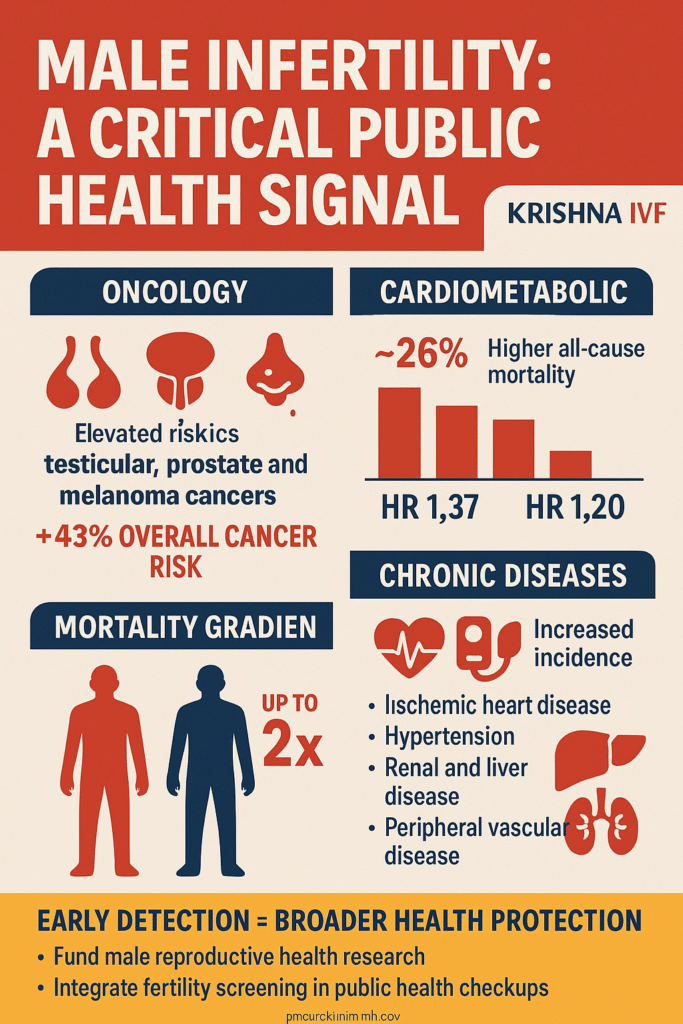
Recent epidemiological data highlight an alarming trend –
- 43% higher overall cancer risk among infertile men.
- Greater incidence of prostate, testicular, and melanoma cancers.
- Earlier onset of malignancies, often within a decade of infertility diagnosis.
At the molecular level, poor semen quality may mirror systemic oxidative stress, DNA damage, and hormonal imbalance – all of which are precursors to chronic disease.
Cardiometabolic Health and Mortality
Men with infertility also face a greater burden of metabolic and cardiovascular disorders:
- 1.3–1.5x higher risk of cardiovascular disease
- 1.4x higher risk of diabetes
- Nearly double the risk of all-cause mortality
A clear mortality gradient emerges —
Azoospermic men show the highest mortality, followed by oligospermic, while normospermic men have the lowest overall risk.
Why Policy Must Catch Up
Despite these well-documented links, male infertility remains underrepresented in public health discourse and funding. Current health screening frameworks rarely assess reproductive function in men — missing an important biomarker for systemic well-being.
Policy Recommendations:
- Integrate male fertility screening into public health check-ups.
- Fund research on reproductive–metabolic health intersections.
- Train clinicians to view male infertility as a multisystem disorder, not a siloed condition.
- Encourage cross-sectoral programs linking urology, endocrinology, oncology, and primary care.
A Call for Action
“Addressing male infertility is not just about helping men become fathers — it’s about safeguarding their future health.”
— Prof. Dr. G.A. Rama Raju, Director, Krishna IVF Clinic, Visakhapatnam
At Krishna IVF Clinic, our ongoing research continues to explore how reproductive biology, genetics, and AI-based diagnostics can improve not only fertility outcomes but also overall men’s health trajectories.